Let’s take the win on tariffs.
February 23, 2026

Within moments of the Learning Resources decision invalidating Trump’s unlawful tariffs under the International Emergency Economic Powers Act, many commentators were rushing to explain why the decision was an illusory victory, that it was really a victory for big business, or that the three conservative justices would not apply the same rationale against Trump if he attempted to assert presidential power over federal elections.
We need to learn how to take a win.
We are engaged in an exhausting battle to defend democracy. If we search for the seeds of defeat in every victory, we will teach people that their efforts do not matter or (worse) are counterproductive.
You would be hard-pressed to find a more outspoken critic of the Supreme Court than me. But here is what I wrote on Friday, hours after the Court’s decision:
Good news! The Supreme Court invalidated Trump’s illegal tariffs in an opinion that reasserts the separation of powers, the primacy of the Constitution, and the role of Congress in making law. Clear-cut victories are rare; we should celebrate! [¶]
The political and economic consequences deserve comment, but we should not lose sight of the simple but powerful fact that the Constitution prevailed. It could have been otherwise.
On the other hand, TCinLA, fellow Substack author of That’s Another Fine Mess, wrote the following in his post Weekend Not So Funnies
In the aftermath of yesterday’s Supreme Court decision, before we go all gooey on the thought of the Court returning to its traditional role, consider that of the six right wing justices, three acted to stop him, and other three tried to contort themselves so as to give the most dangerous threat the country has ever faced even more unconstitutional power than they and the other three have already ladled out for him. This court still cannot be trusted. Yesterday was a fluke.
So, who is right? Me or TCinLA? In truth, we both are to some extent—although, as explained below, it’s possible that Friday’s decision was not a fluke. (Reasonable minds can differ on that point.)
Objectively, the Court reached the right result for the right reasons. It moved expeditiously (as explained below). Three conservative justices applied the Major Questions Doctrine as a direct limit on presidential claims of delegated authority. All of that is good news that should be celebrated, not twisted into an indictment of the Court’s actions in this instance.
Members of the resistance have felt besieged and abandoned as the major guardrails of democracy have failed in a breathtaking, cascading fashion. The standout exceptions to that catastrophic collapse have been the grassroots resistance and federal judges at the district court level. Last Friday, the Supreme Court issued a significant limitation on Trump’s audacious claims of presidential power. That is cause for celebration. We need to learn how to take a win.
The fact that we are celebrating a victory does not mean that we have “gone gooey” or forgotten the awful history of decisions by this Court that cannot be explained by any rationale other than partisan bias. But if we expect to motivate people to follow us into battle to save democracy, we cannot characterize victories as defeats in disguise.
Indeed, the genius of George Washington is that he convinced a reluctant nation that surviving repeated defeats was itself a form of resistance — and that sheer persistence, not battlefield triumph, would exhaust the British and ruin the King.
We cannot fall victim to the inverse strategy, the seductive intellectual trap of convincing people that victories are defeats. Like Washington, we must convince people to remain steadfast during turbulent and uncertain times.
Last Friday, democracy prevailed. The Constitution prevailed. The people prevailed. It is true we must remain vigilant and avoid self-deception about the difficult path forward, but those facts do not invalidate the victory of a Supreme Court that—for once—did its job.
Addressing reader questions / confusion around the Supreme Court’s tariff decision.
Readers posed many questions in the Comment Section and by email. I address those questions, as well as commentary from political writers.
If the Supreme Court “struck down” Trump’s tariffs, how could he impose new tariffs on Friday?
Good question. The Supreme Court ruled that Trump could not impose tariffs under the International Emergency Economic Powers Act (IEEPA). On Friday, in response to that ruling, Trump issued a proclamation repealing tariffs issued under the IEEPA.
Immediately thereafter, Trump used a different statute to impose an “ad valorem tax” (a tariff) for 150 days pursuant to Section 122 of the Trade Act of 1974. CNBC, Trump to hike global tariffs to 15% from 10%, ‘effective immediately’.
There are crucial differences between IEEPA “tariffs’ (now illegal) and ad valorem taxes under Section 122.
Trump claimed that IEEPA gave him the authority to impose tariffs at different rates on a country-by-country basis for any reason he deemed fit. For example, Trump famously raised the tariff on Swiss products from 30% to 39% because he didn’t like the “aggressive tone” of Swiss President Karin Keller-Sutter during a phone call.
By contrast, under Section 122, Trump can impose a temporary (150-day) ad valorem tax on imports from all countries worldwide (except Canada and Mexico due to trade agreements). Thus, Trump can no longer impose tariffs on a nation merely because it has a strong woman president who pushed back against Trump during a phone call.
Why didn’t the Supreme Court tell the Trump administration how to give refunds of tariffs illegally collected from American companies?
Another good question. The short answer is that the Supreme Court was exercising its appellate jurisdiction, i.e., it was deciding the questions framed by the parties’ appeal. None of the parties asked the Court to decide the refund questions. Accordingly, the Court decided only the question before it—whether the tariffs were legal under the IEEPA.
The restraint by the Court in addressing only the question before it was appropriate. By contrast, Justice Kavanaugh’s dissent listed a half-dozen ways the Trump administration could circumvent the Court’s ruling by using other statutes to impose taxes on imports.
Kavanaugh’s opinion was inappropriate in that he seemed to be coaching the administration on possible political responses to the opinion. That is not only bad form, but also contrary to the Court’s core function—to decide “cases and controversies,” not to provide political advice or advisory opinions. See Salon, Supreme Court’s tariffs ruling reveals two political orders. (“Kavanaugh took the unusual step of offering the president a roadmap for getting around the Court’s decision.”)
Why did the Supreme Court “wait so long” to issue its ruling?
Trump criticized the Court for taking so long to issue its ruling. That criticism has been extended by political commentators who have incorrectly suggested the Supreme Court “stayed” the lower court rulings invalidating the tariffs, thereby “allowing” illegal tariffs to remain in effect for six months. See, e.g., Josh Marshall of Talking Points Memo, Don’t Be Fooled By the Corrupt Court’s Tariff Decision.
Marshall wrote,
The [Supreme] Court also allowed the tariffs to remain in place while the government appealed the appellate decision striking down the tariffs back in August. Let me repeat that: back in August, almost six months ago.
In other words, most of the time in which these illegal tariffs were in effect was because of that needless stay.
To the extent Marshall suggests that the Supreme Court issued a stay of the lower court rulings to allow the tariffs to remain in effect, Marshall is wrong. Instead, the Federal Circuit Court of Appeals and the district court from which the appeals were taken effectively stayed their own rulings to allow the appeals to proceed to the Supreme Court. 1
The Court accepted review of the cases on September 9, 2025, heard oral argument on November 5, and issued a ruling on February 20, 2026—which, in Supreme Court terms, is acting with lightning speed. (Yes, I know that the Court has acted more quickly by using its “shadow docket.” The better practice is to consider weighty constitutional questions after full briefing and argument, as the Court did here.)
“This was just a win for big business. The Supreme Court won’t apply the same scrutiny if Trump tries to rig the midterms.”
I noted that the decision in Learning Resources suggests that the Court will restrain Trump in future exercises of presidential power. Readers pushed back against my view, saying, “The Supreme Court invalidated the tariffs because that is what big business wanted. It won’t exercise the same restraint in voting rights cases.”
It would be naive to suggest that the interests of big business had no influence on the outcome in this case—and that is not what I am suggesting. But Roberts, Gorsuch, and Barrett went out of their way—when they did not need to do so—to limit presidential claims of delegated authority. They did so by applying the Major Questions Doctrine to Trump’s claim that Congress delegated to him the authority to impose tariffs.
Justice Roberts, joined by Gorsuch and Barrett, wrote that in instances where the president claims authority pursuant to a congressional delegation involving a “major question,” the President must “point to clear congressional authorization.”
Because Trump could not point to “clear congressional authorization” to impose tariffs, his claim of congressional delegation of authority failed.
Professor Rick Hazen addresses the obvious parallel to a potential claim by Trump that Congress has delegated to him the authority to regulate the time, place, and manner of federal elections.
Hazen writes,
The same could be said with the power to override state laws governing the time, place, and manner of congressional elections. The Constitution gave that power to Congress alone in Article I, section 4’s “Elections Clause.” Any attempt by Trump to try to defend his exercise of executive powers over the conduct of congressional elections under state rules should fail for the same reason as his power over tariffs fails: the conduct of elections is certainly a question of major national importance . . . .
It is certainly possible that Roberts, Gorsuch, and Barrett could limit the Major Questions Doctrine to situations that benefit big business—but that would be intellectually dishonest to a degree that might embarrass Roberts, Gorsuch, and Barrett.
If Trump claims he possesses the delegated power to impose national voter ID and proof of citizenship, that claim would likely end up on the Court’s docket in August (or earlier). Roberts et al. would have just endorsed the Major Questions Doctrine as a limit on presidential power in February, six months earlier. They are human and vain. They think about their legacies. Flipping on the Major Questions Doctrine in a six-month time span might be too much even for Trump allies.
Making predictions is difficult, especially about the future. Whether the conservative justices will apply the Major Questions Doctrine to Trump in the future is speculative. I think the evidence suggests that Roberts, Barrett, and Gorsuch will stick to their effort to limit presidential power at the expense of Congress.
I could be wrong. Reasonable minds can differ, but rejecting the possibility out of hand is not reasonable. Four days ago, it was not a possibility. Today, it is. That is progress. And reason to celebrate.
Opportunities for Reader Engagement
Focus for Democracy is bringing back Accelerate Change to share how they have changed the game in online media and can now go toe-to-toe with the Right. Next Tuesday, February 24th, at 5 PM PT/8 PM ET, they will be sharing more of their groundbreaking work to turn the media narrative—and the public—against Trump.
Join Focus for Democracy on Zoom to learn more about their 2026 strategy, which will maximize success by focusing on nested races, under-the-radar districts, and Senate races in small states.
Tuesday, February 24, 5 PM PT/8 PM ET
Register at this link.
Concluding Thoughts
To anticipate responses to the newsletter, let me be clear: I do not believe any part of our plan of resistance involves relying on the Supreme Court as a backstop. It acted as one last week, for which we should be grateful. It might do so in the future, at least in evaluating claims of congressional delegation of power, but we can’t count on the Court to be a reliable ally.
Moreover, the need to reform the Court is more urgent than ever. The most expedient way to do so is through a major expansion of the Court. That can be accomplished by a majority vote in both chambers of Congress2 and by the president's signature. Those conditions can be in place by early 2029. The expanded Court can then set about reversing Citizens United, Dobbs, Shelby County v. Holder, Trump v. US, D.C. v. Heller, Loper Bright Enterprises, and others.
Overruling the worst of the Roberts Court’s opinions would be a giant leap forward for democracy. We are within striking distance of doing so. We need to win—and we need the courage to reform the Supreme Court. The brief return to rationality in the Learning Resources case should whet our appetites for more, soon.
Talk to you tomorrow!
Pro-democracy protest photos.
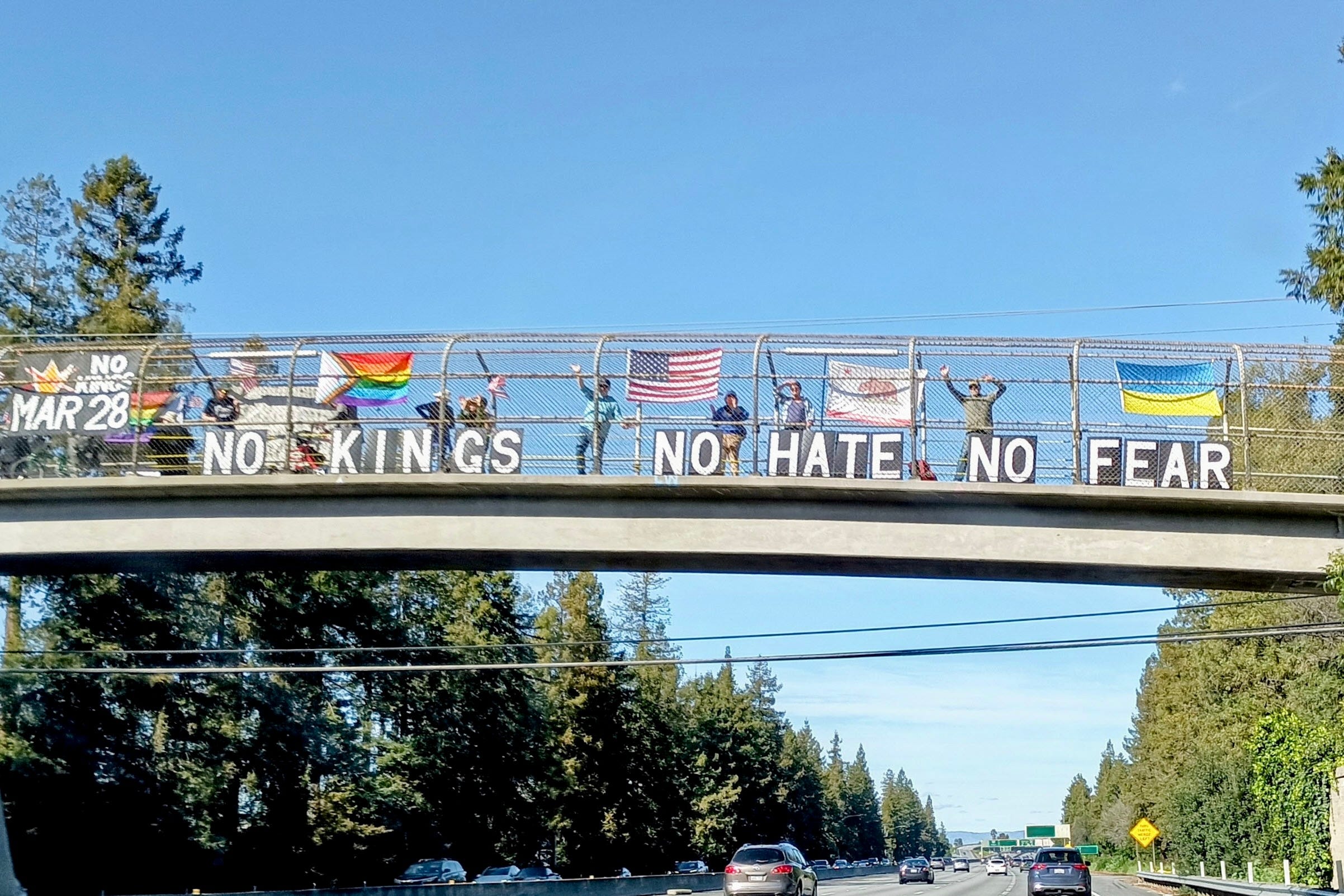
Indivisible San Jose - CA
Sunny weather greeted Indivisible San Jose members on the overpass. Our No Kings banners are handmade and painted by our two leaders.
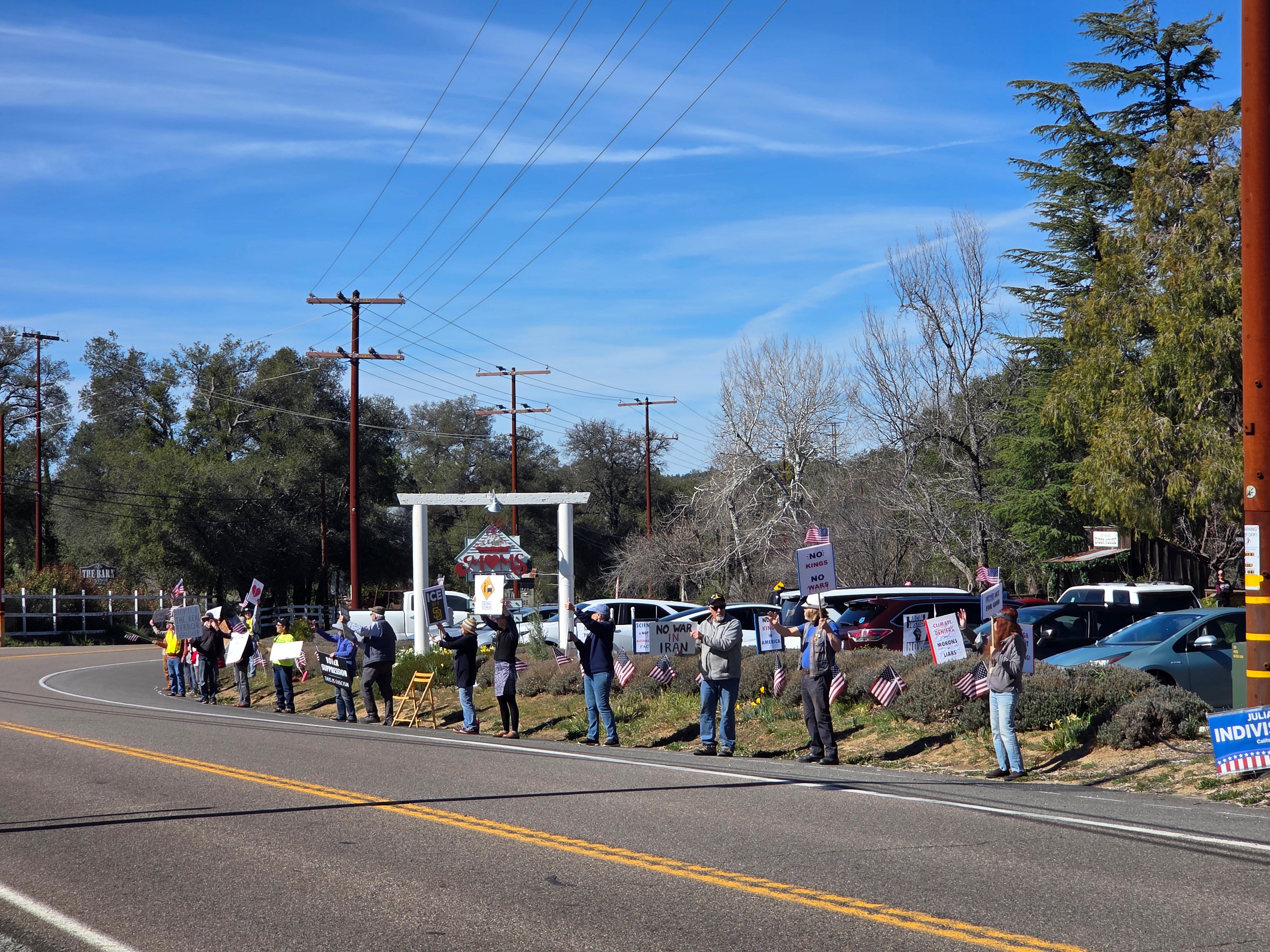
Julian Indivisible has been protesting the Trump admi istrations actions every Sunday at 1pm in Wynola as hundreds of tourist vehicles pass buy. We are averaging 30 volunteers each week with a high of 55. Not bad for a town of 2,000 people.
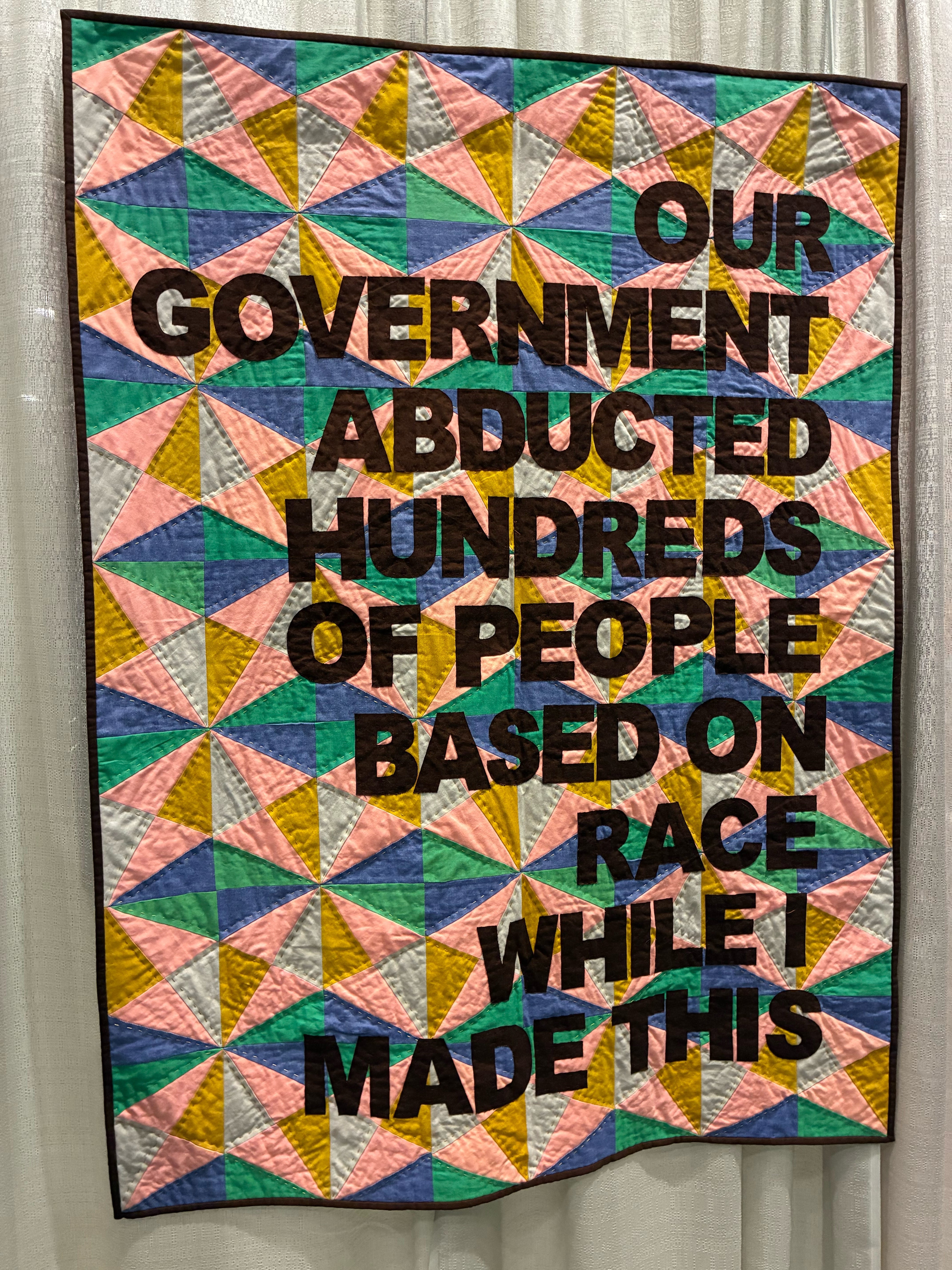
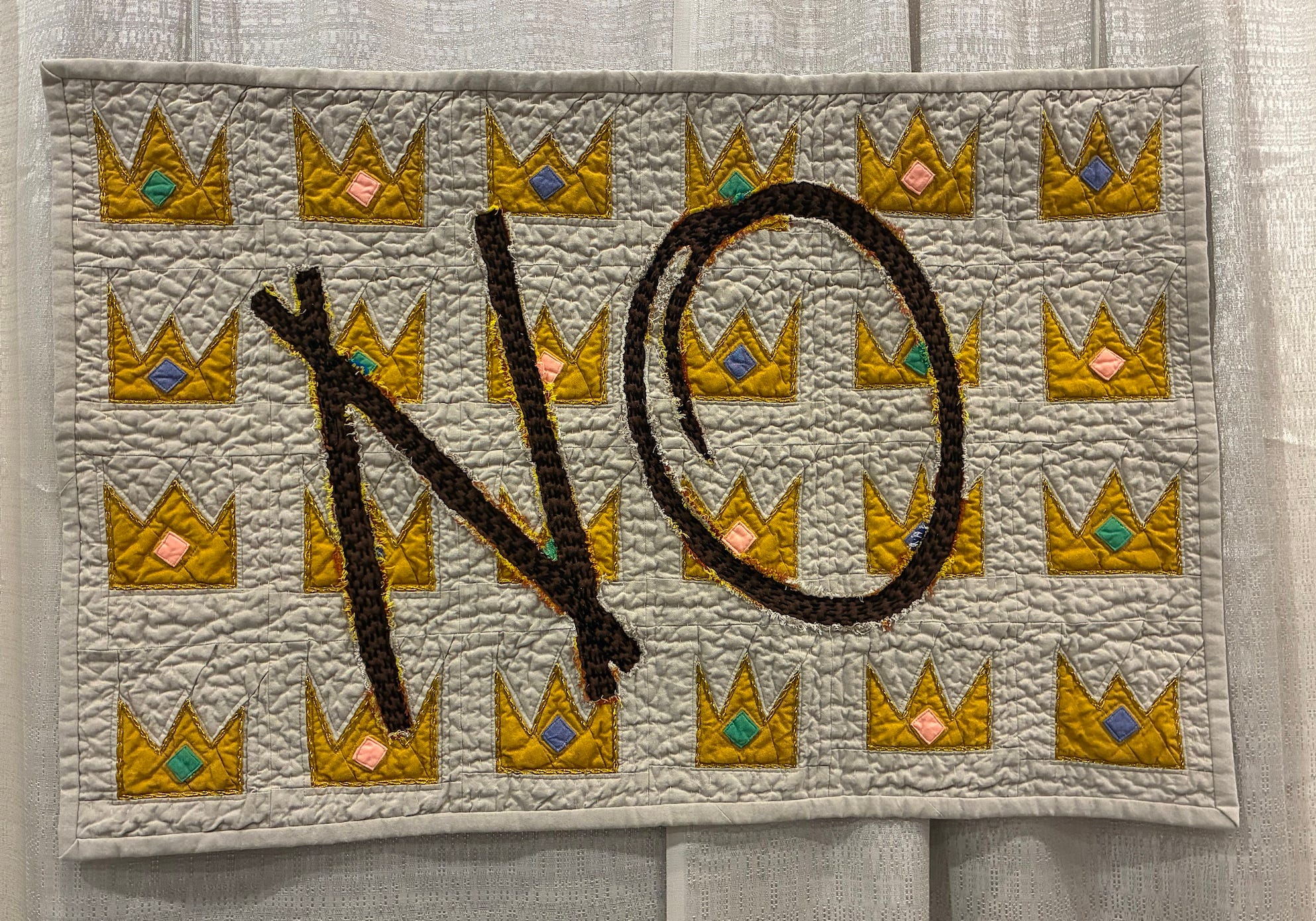
I went to the Modern Quilt Guild’s annual convention this year; it was held in NC. It is called “QuiltCon” and is the largest modern quilt event in the world. I was blown away by how many protest quilts there were.
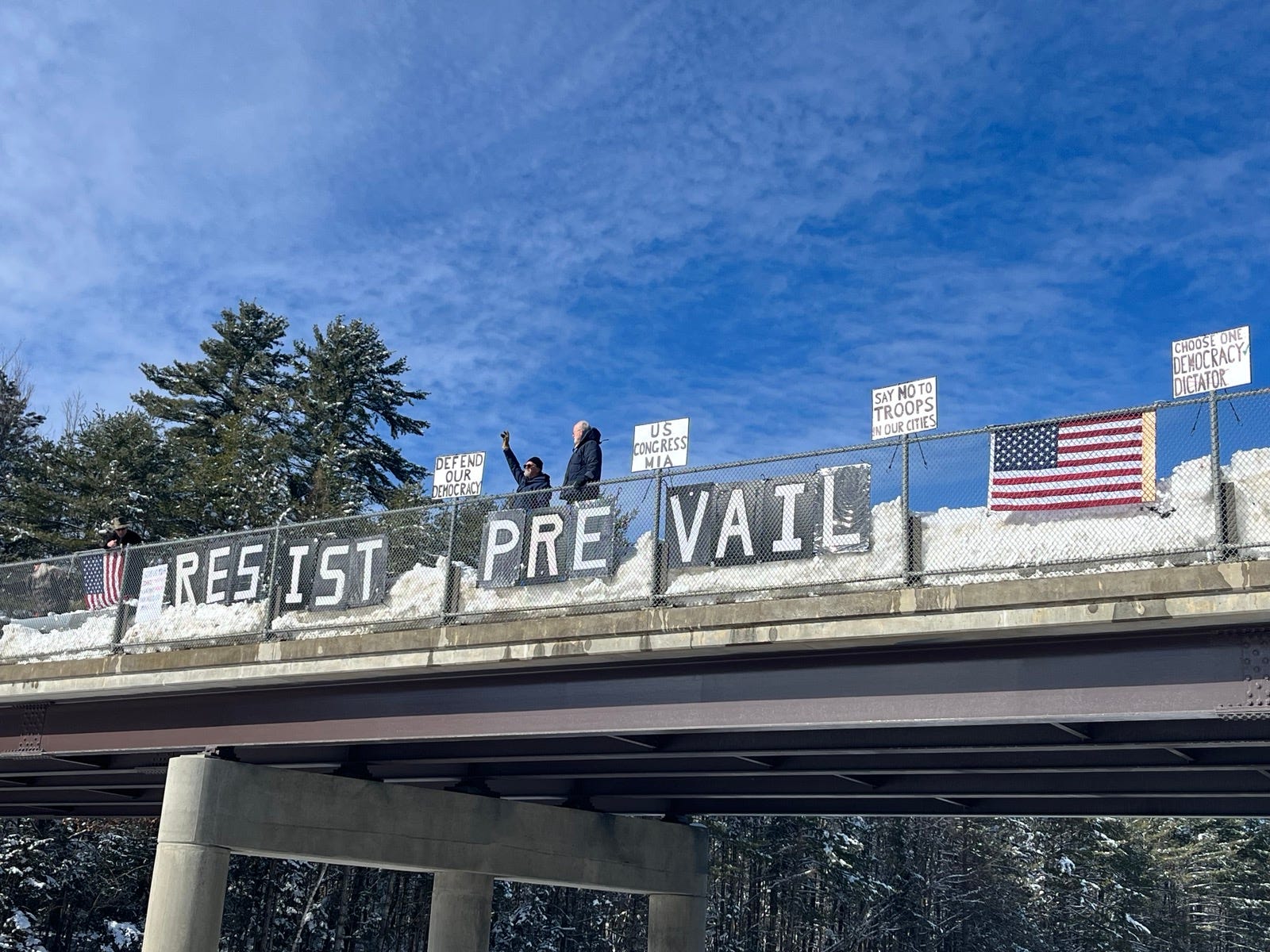
North Country Resilience volunteers were on an I-93 overpass in Bethlehem, NH once again. We continue to RESIST, and hope to PREVAIL.
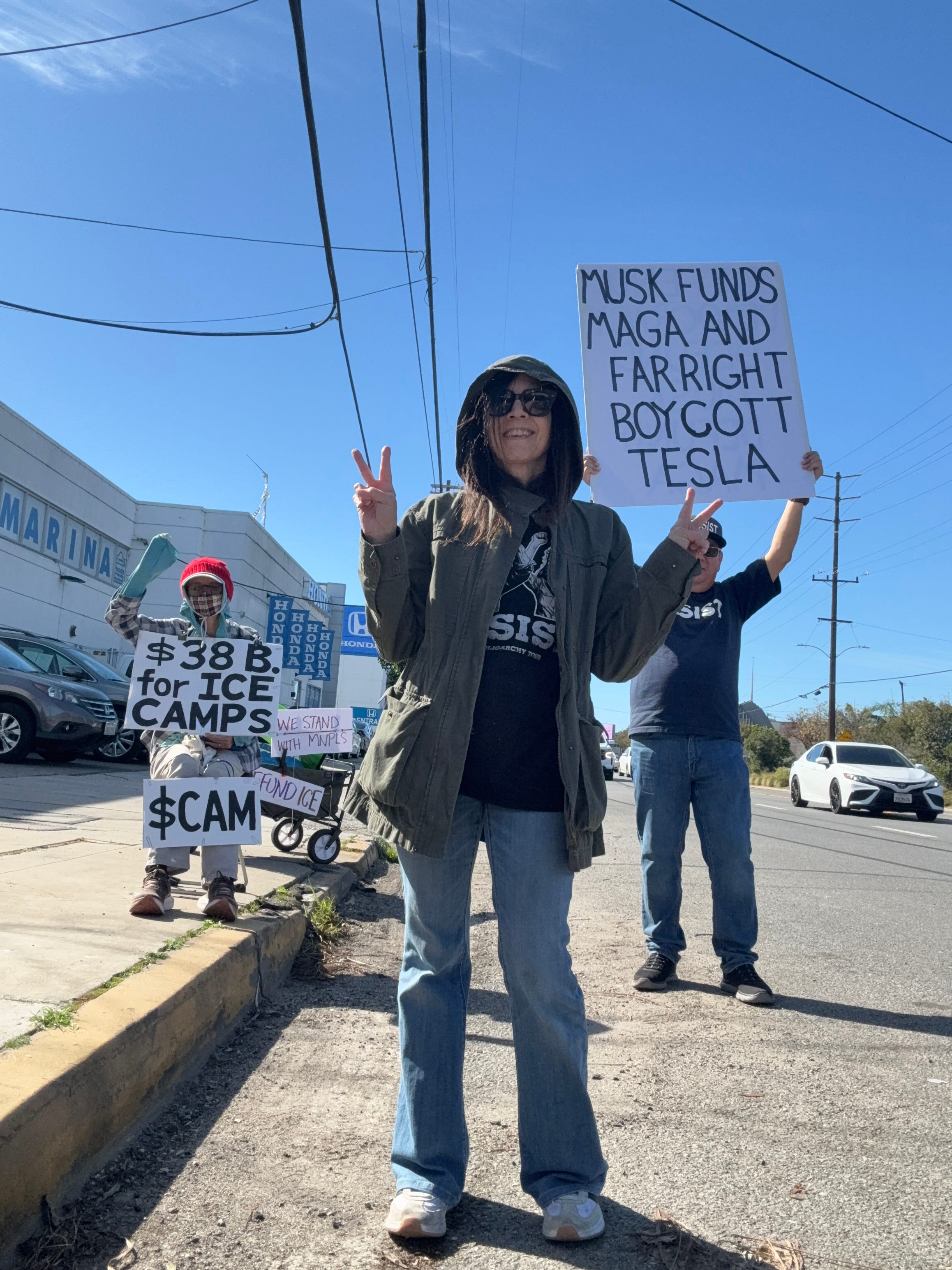
It’s over a year and we are still here!!
3 of us remain. Tesla Takedown Centinela - Tesla Motors, Los Angeles 2/22/26
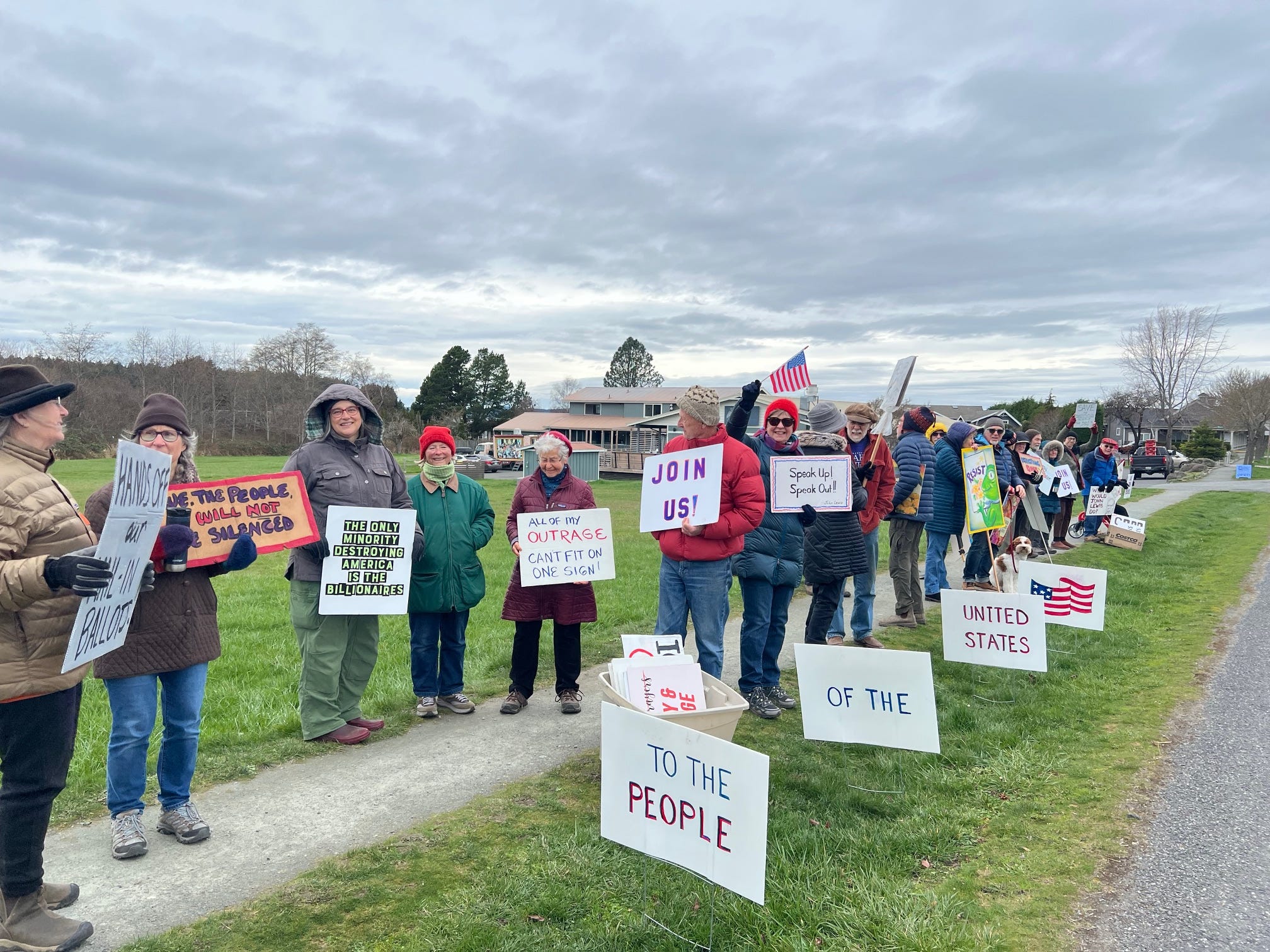
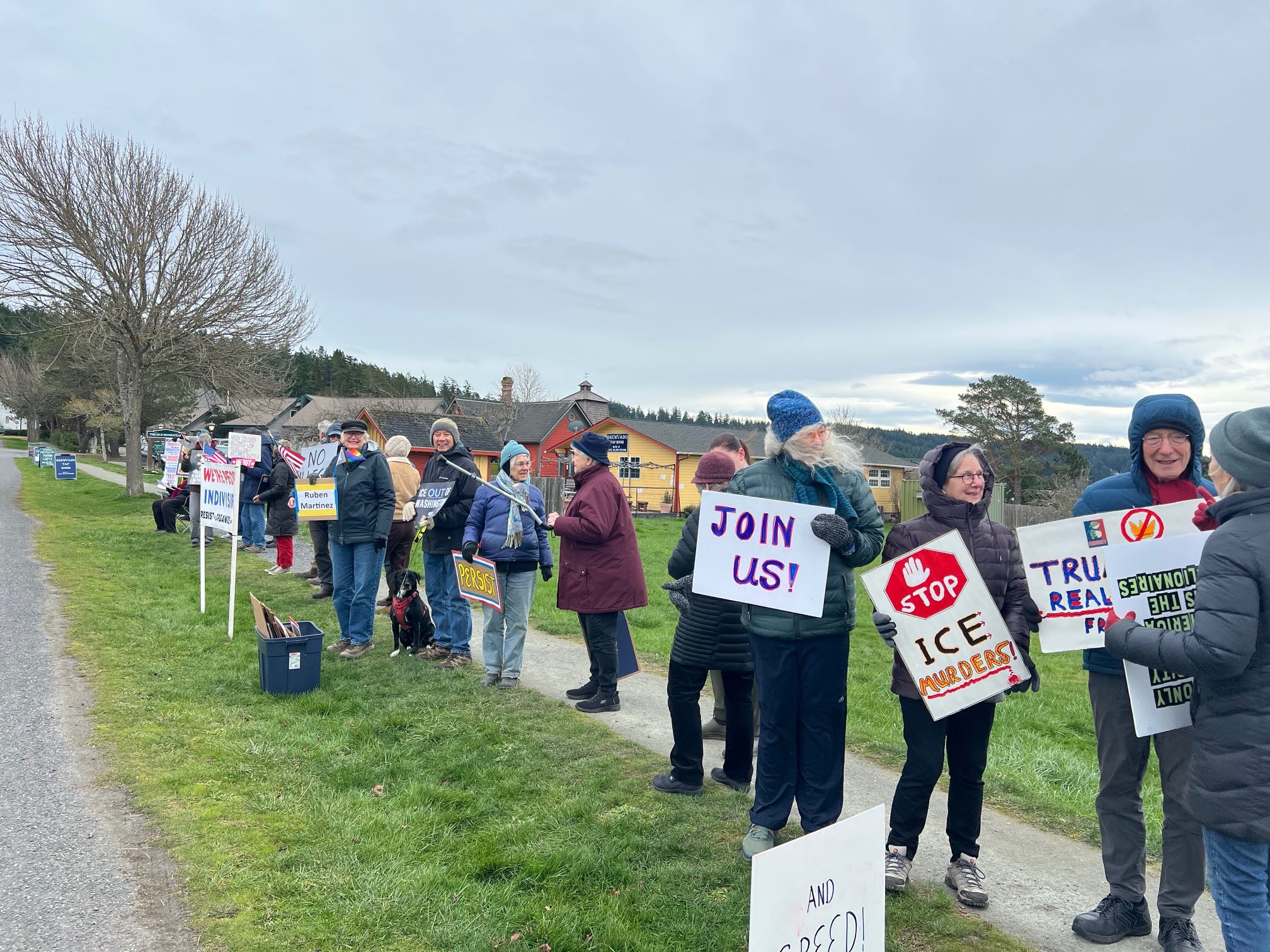
Indivisible Lopez Island WA
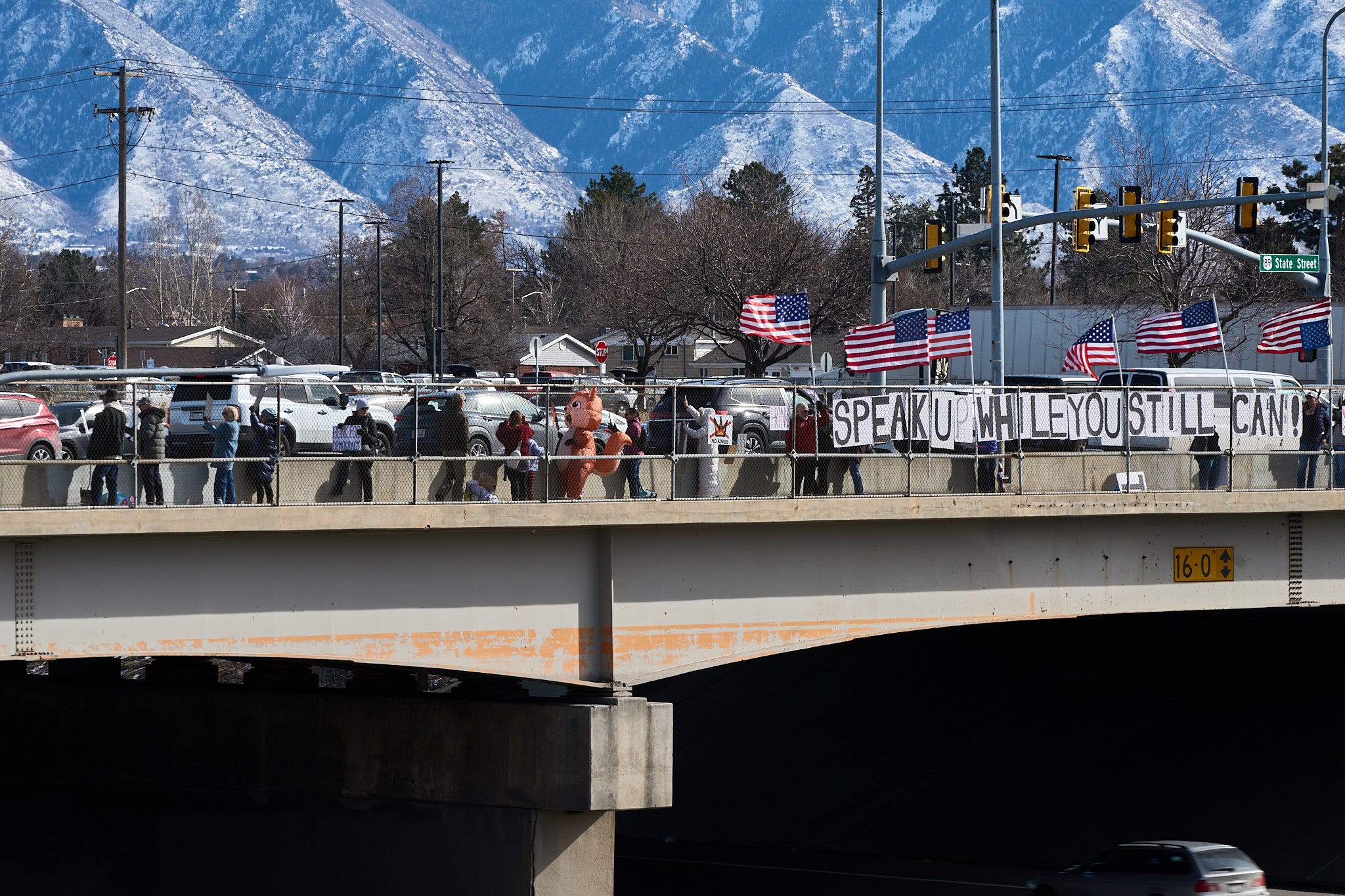
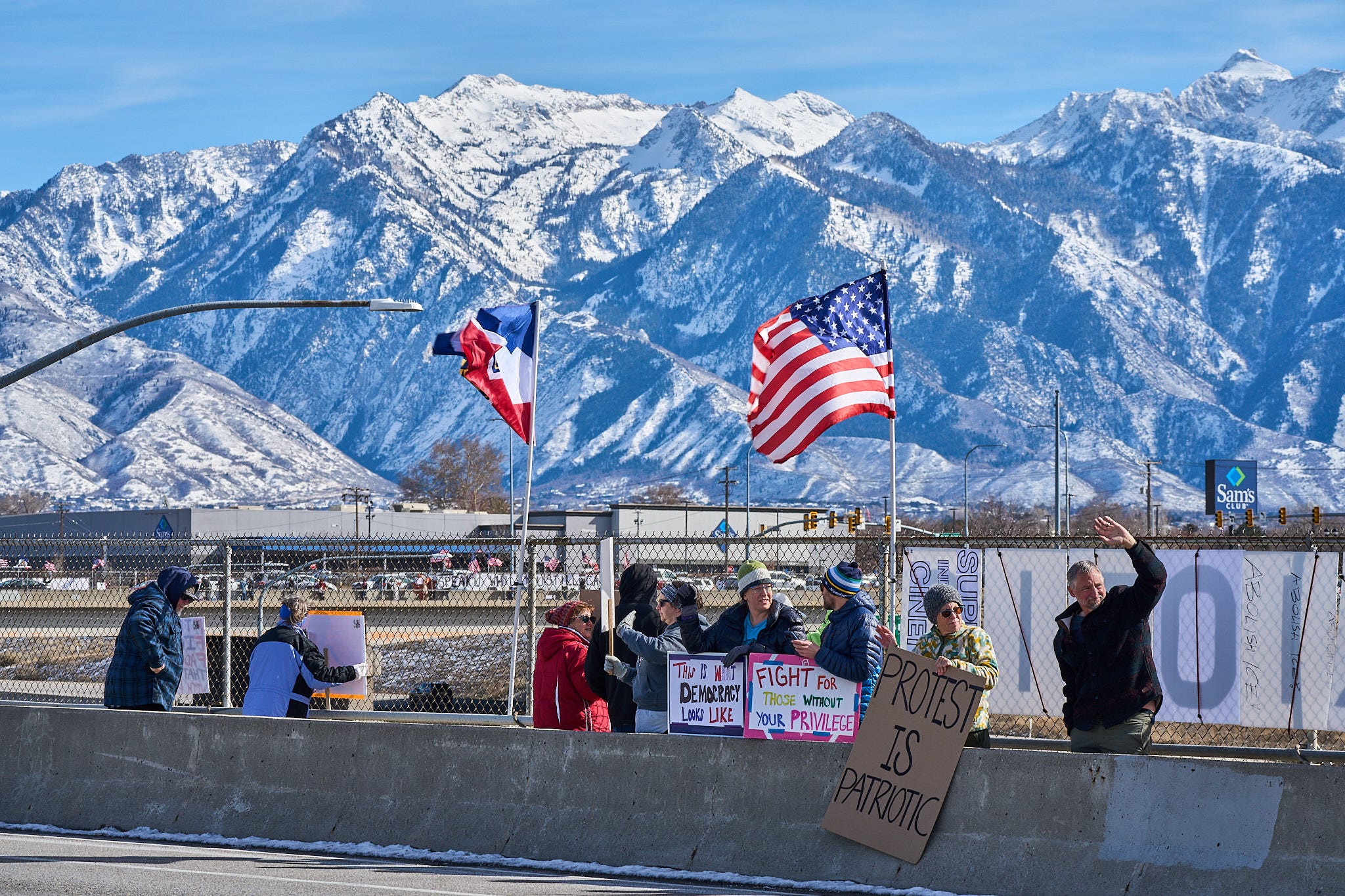
Here's what the Overpass Action group I belong to did this past Saturday: over 100 participants occupied both sides of two adjacent I-215 overpasses in Salt Lake City, Utah.
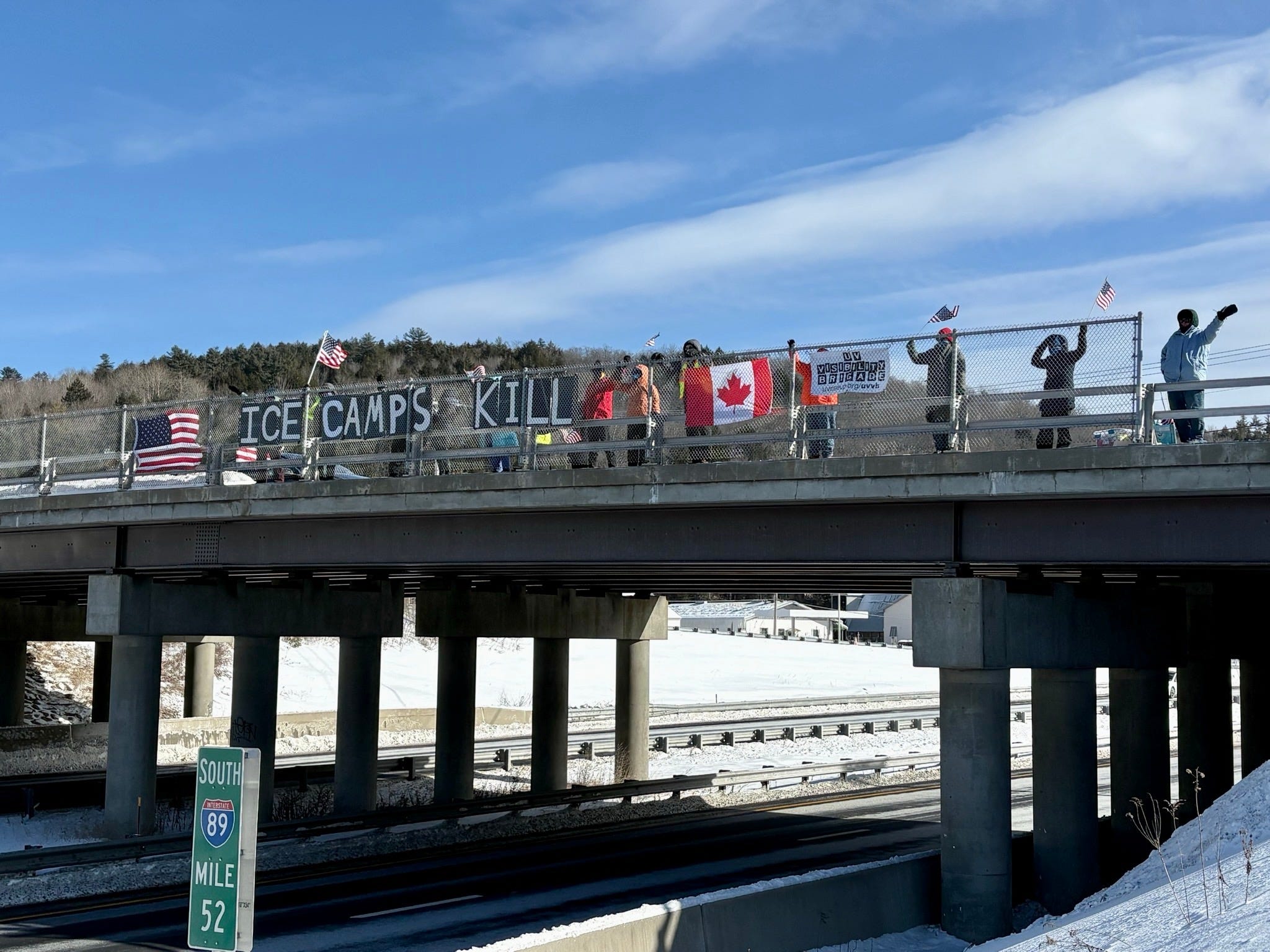
Today, 2/22/2026, Enfield, NH. NH Bridge Brigade and Upper Valley Visibility Brigade.
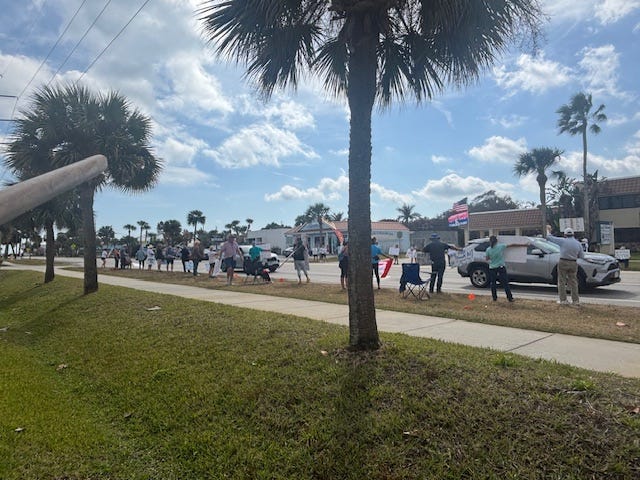
Melbourne Beach, Florida. MB is in Brevard County, which sent more people to the January 2021 attempted coup than any US county.
South Central Kansas and neighboring counties in Oklahoma
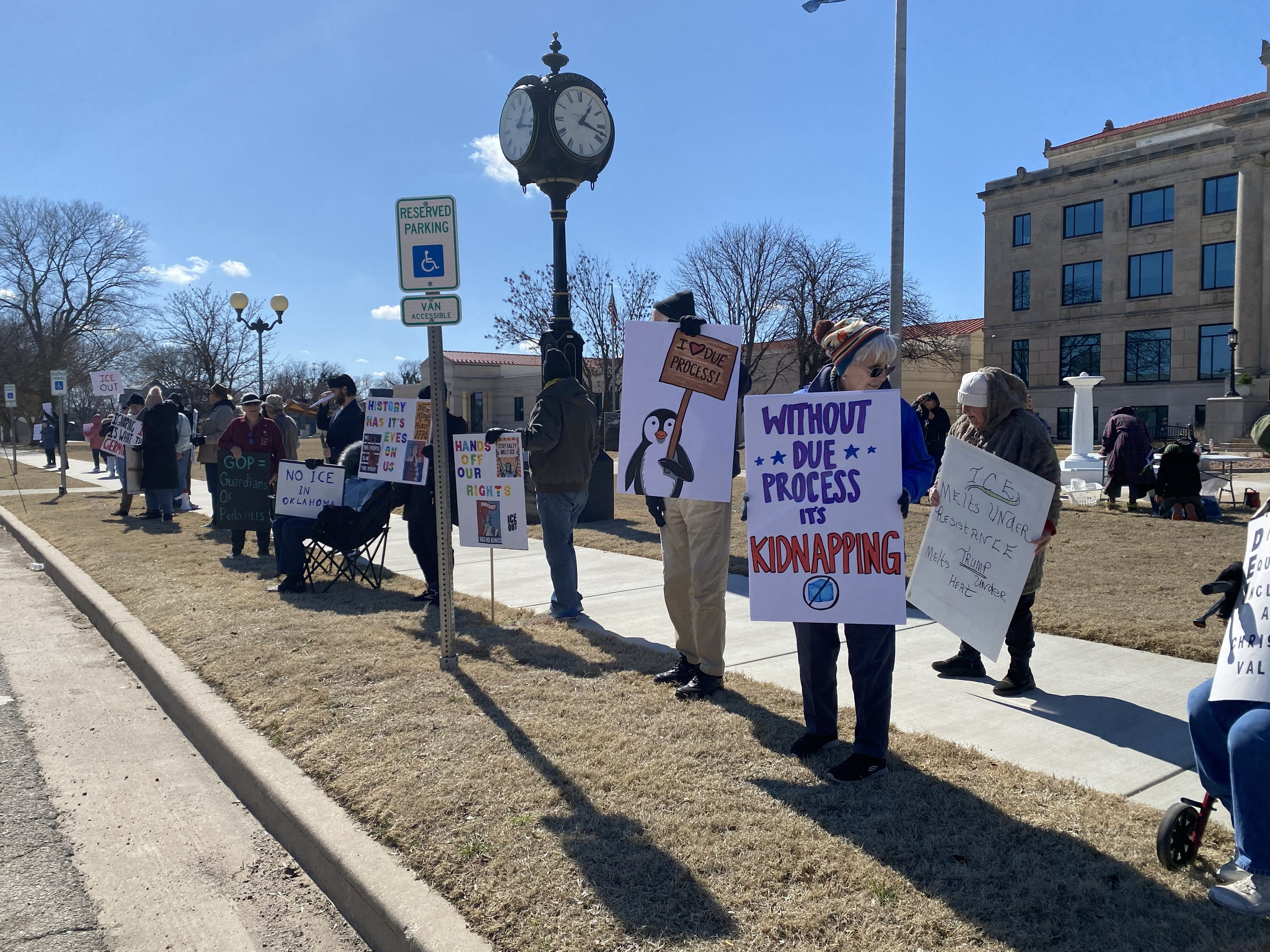
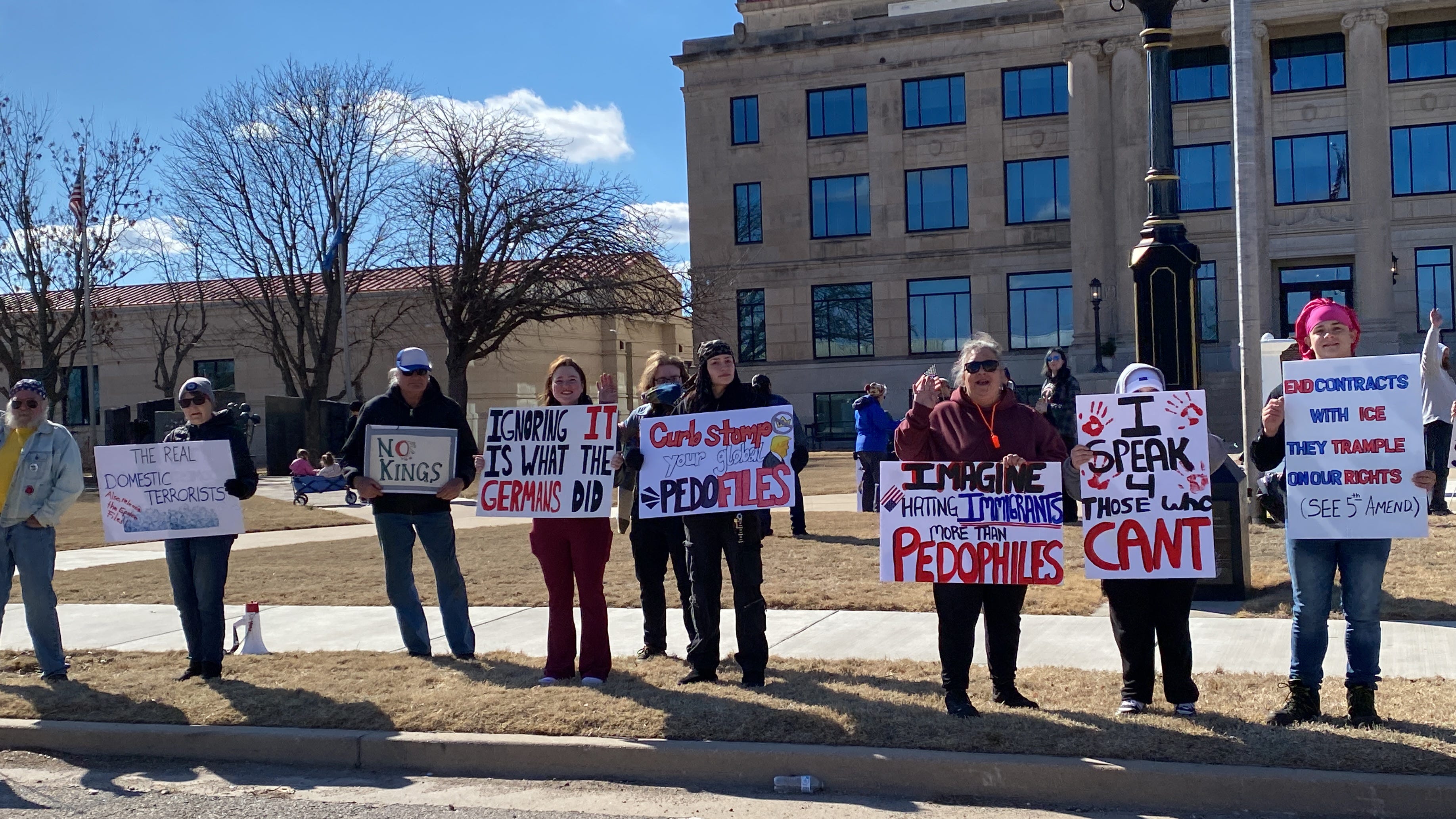
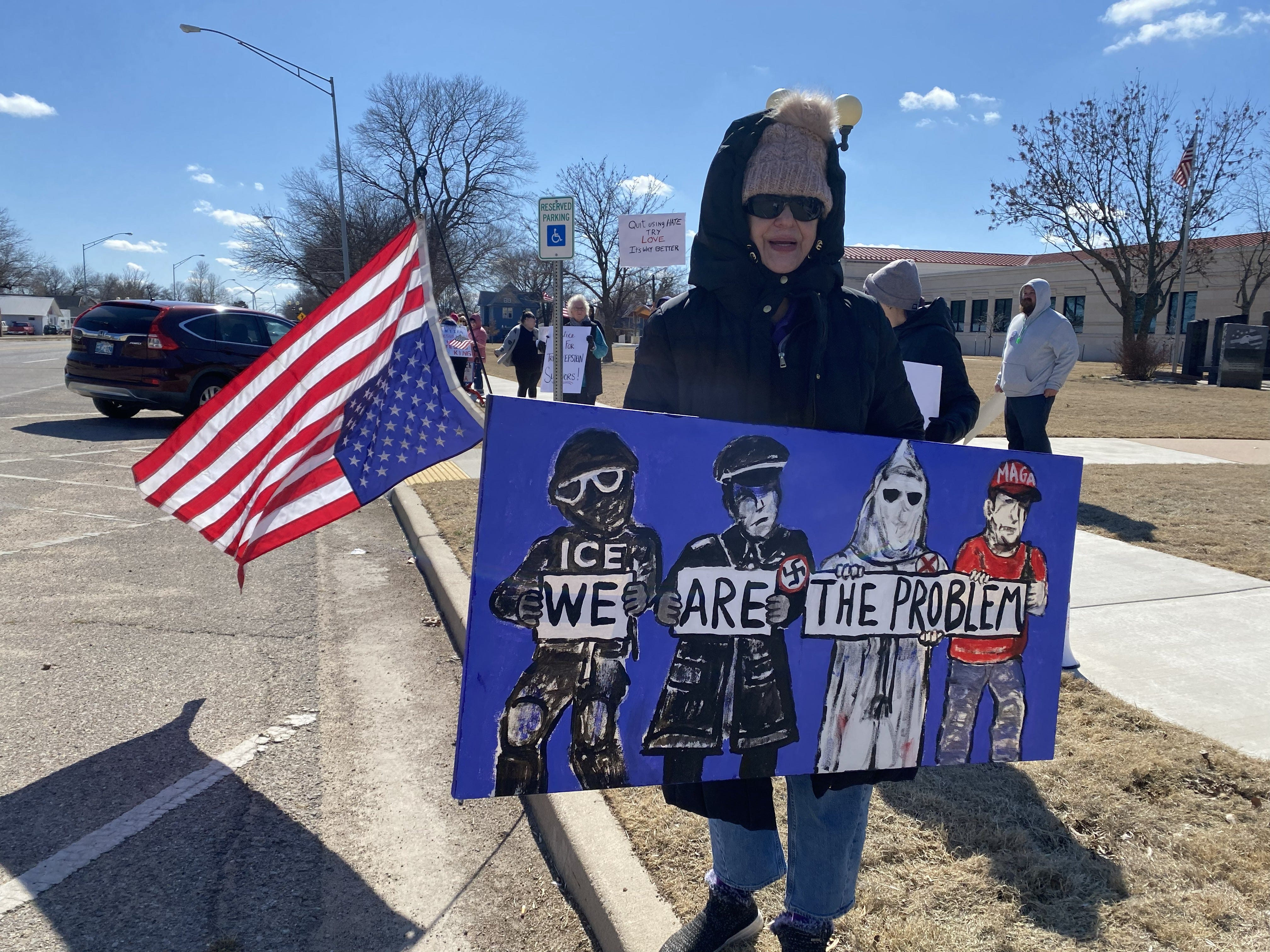
Anti-fascist protest in deep red area of Miami
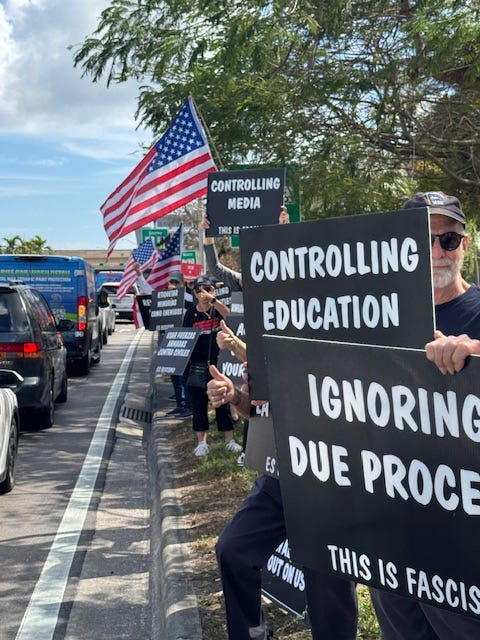
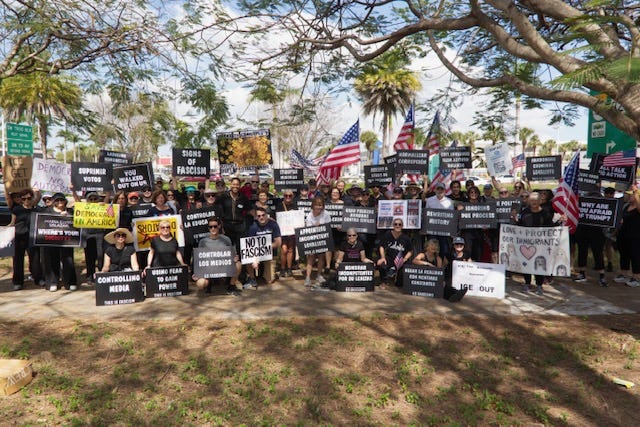
Here is a picture from Long Lake, Minnesota, which is about 10 miles west of Minneapolis, MN.

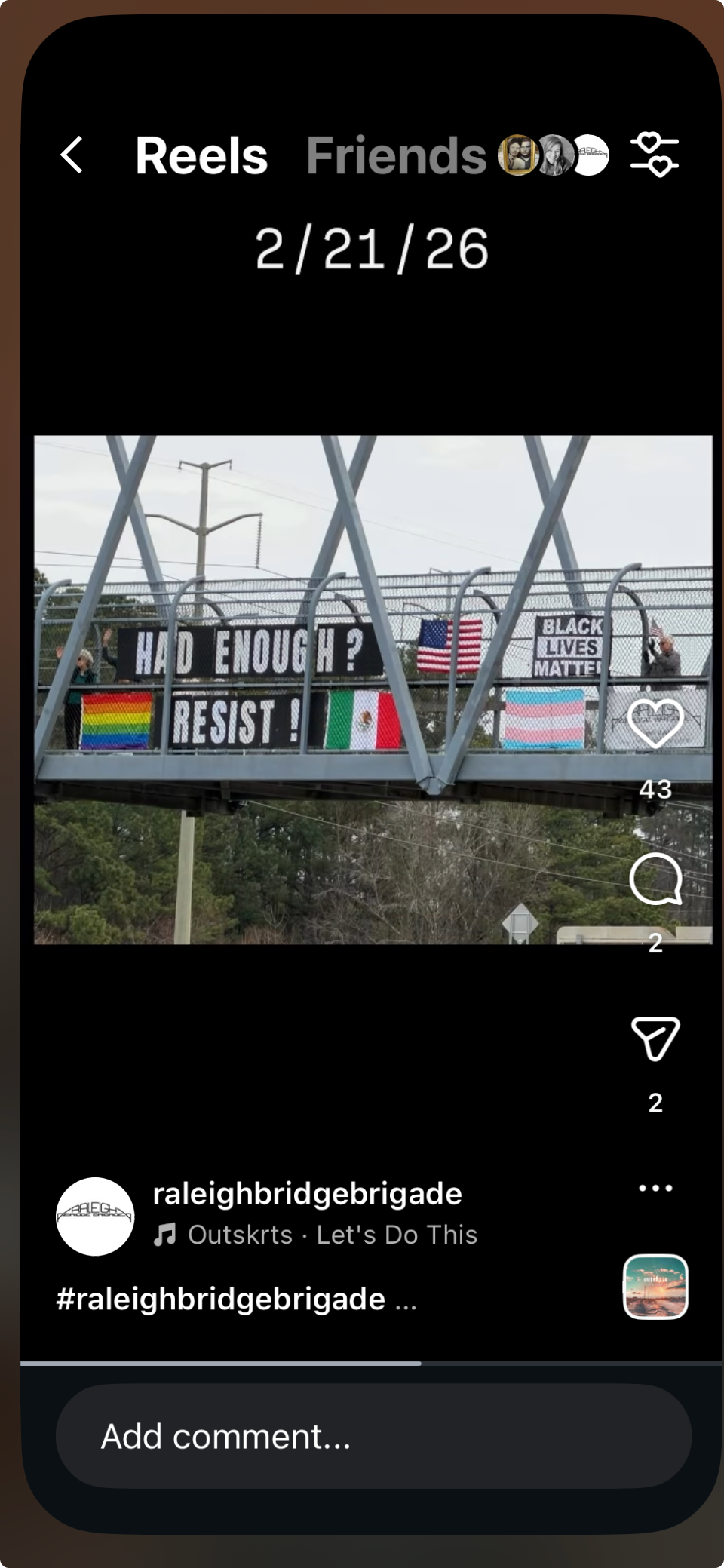
Latest photo from Raleigh Bridge Brigade
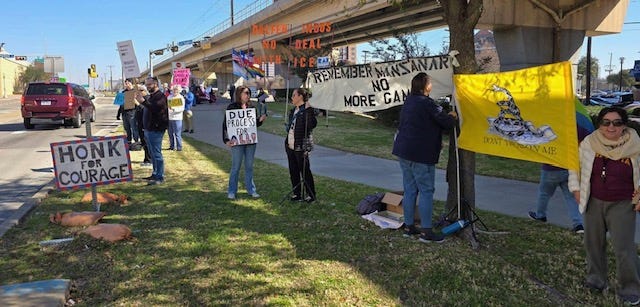
Richardson, TX protest photos
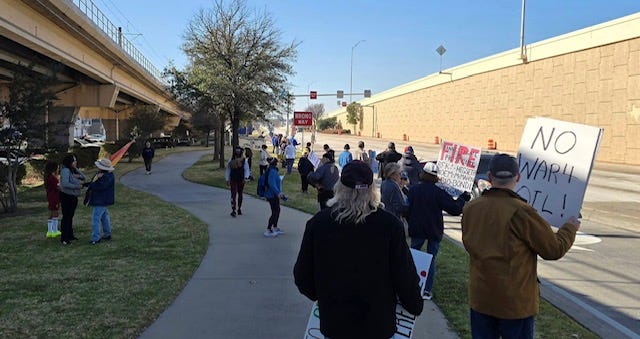
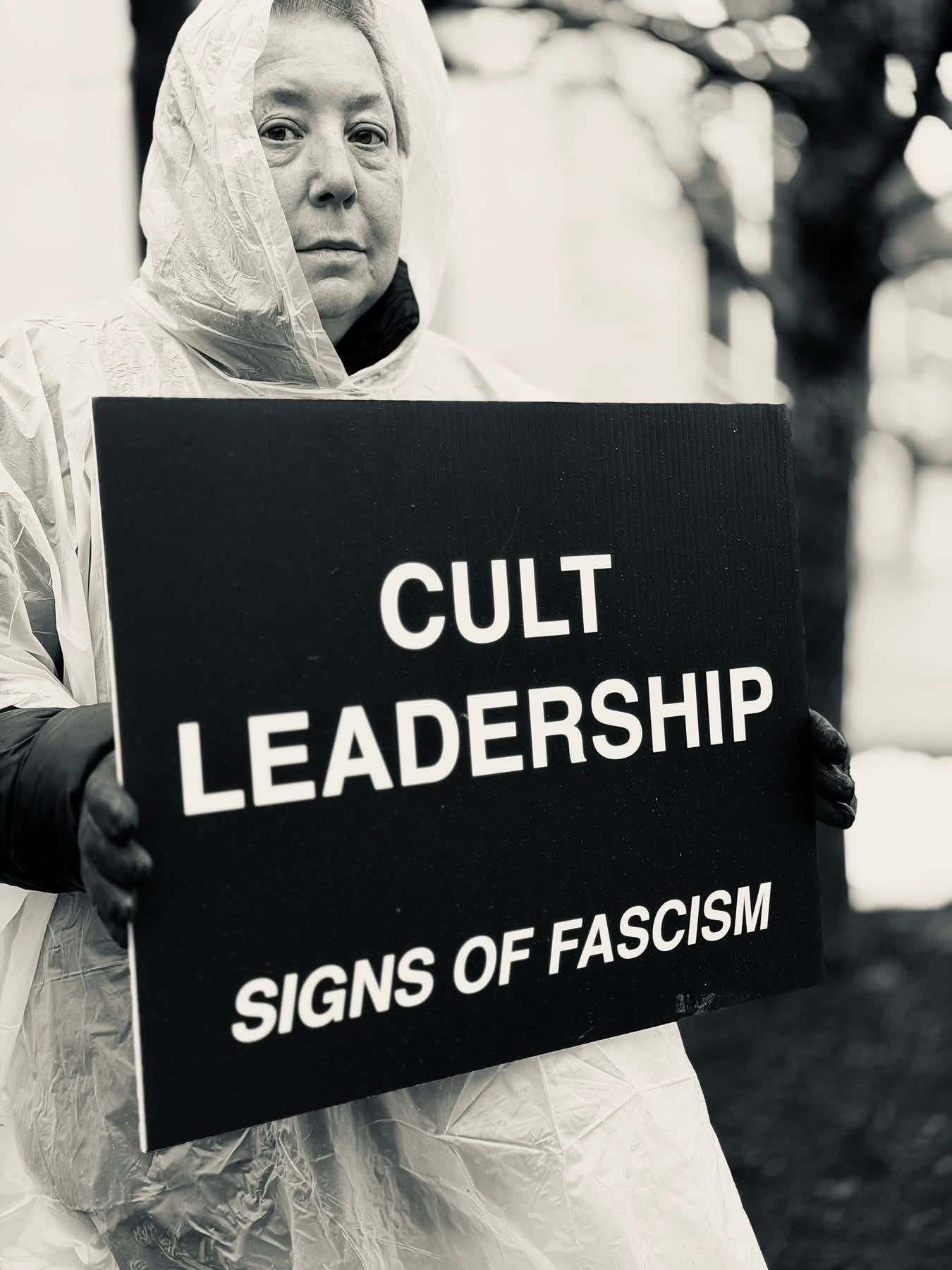
Signs of fascism protest at Berkeley Springs, WV
The situation is more procedurally complicated than my brief description suggests. For lawyers who are interested in the details, the Federal Circuit dissolved the Court of International Trade’s injunction and remanded the case for further consideration, but then stayed the CIT from taking further action “while the issuance of the mandate is withheld,” a prohibition designed to allow the Trump administration time to seek review in the Supreme Court. See Federal Circuit Blog, Federal Circuit Affirms Court of International Trade’s Invalidation of President Trump’s Tariffs.
Separately, a district court issued a stay of its ruling pending review in the D.C. Circuit. Before the D.C. Circuit acted, the Supreme Court granted certiorari before judgment of the district court’s ruling. See Learning Resources, Inc. v. Trump 1:25-cv-01248 (D.D.C.) | Civil Rights Litigation Clearinghouse
In short, the Supreme Court did not issue a stay that permitted the tariffs to remain in effect.
A carve-out to the filibuster would be required, but creating a carve-out only requires 51 votes.
This really hit me: "the genius of George Washington is that he convinced a reluctant nation that surviving repeated defeats was itself a form of resistance — and that sheer persistence, not battlefield triumph, would exhaust the British and ruin the King." What a brilliant point.
There is so much goodness in your Daily Edition this morning! The past couple days Robert you have also included protest efforts photos in Raleigh, Cary, and Durham. Each 3rd Saturday Operation Overpass coordinates monthly bridge bannerings. I was on I85 at Hillandale Road. It was a couple miles from the Durham Freeway pedestrian bridge that you included which 'connects' parts of the historical Hayti neighborhood of Durham. Some friends were on that bridge.
I also want to point out one of the plaintiffs, Learning Resources, in the tariff ruling. The case is named after them. This an independent educational toy company from the Chicago suburbs. A family operation who apparently makes some pretty legit products. One can point to some news stories, but I rather enjoyed going to their website and learning more:
https://www.learningresources.com/