Preparing for the shutdown battle . . . .
February 3, 2026
Monday’s news scattered in many directions, making it challenging to find a focus. Indeed, some of the biggest stories were notably absent from the headlines. One story that I want to flag is Trump’s statement that the GOP “should nationalize elections” in fifteen states. That comment frightened many readers and gave the media plenty of clickbait. While Trump is the greatest threat to our democracy in 2026, neither he nor the GOP will be able to “nationalize” elections in any state. See the story below under the heading, Trump’s request that Republicans “nationalize” elections in 15 states is not serious.
But before addressing Trump’s temper tantrum (a “temper tantrump”), let’s acknowledge the major stories that are not receiving the “above the fold” coverage they deserve.
First, the federal government is partially shut down because of the lapse of the last continuing resolution on January 31, 2026. The quickest path to reopening is for the House to pass the five appropriations bills and the DHS two-week continuing resolution—something it could do with 100% support from the House Republican caucus. Some hardline House Republicans are demanding “poison pill” amendments that would send the legislation back to the Senate for another vote, where it would fail.
Some of the most extreme House members are demanding that the voter suppression bill known as the SAVE Act be attached to the appropriations bills. If that happened, the bills would go back to the Senate, where Democrats would vote against the SAVE Act—and the attached appropriations bills. This path is unlikely and will only lead to an extended shutdown. And for the many readers who worry that the SAVE Act will become law as part of the appropriations process, it will not! For the SAVE Act to pass, it would need support from 8 Democrats to overcome the filibuster—and that isn’t going to happen.
For a good overview, see USA Today, When will the government shutdown end? (“Rep. Anna Paulina Luna, R-Florida, wrote on social media that the “price” for her vote on the funding legislation is amending it to incorporate the SAVE Act, a voter ID bill.”)
So, the brief shutdown could end on Tuesday, or drag on indefinitely as GOP hardliners demand passage of the SAVE Act. Trump is already agitated at the GOP House caucus, so he will likely attack any Republicans who refuse to support a quick solution.
Second, the DOJ’s production of the Epstein files would be a cruel joke if it weren’t so cruel. The redactions seem intended to protect the perpetrators and expose the victims. See Ars Technica, DOJ released Epstein files with dozens of nudes and victims’ names, reports say.
Per Ars Technica,
The Wall Street Journal reported yesterday that the files included full names of victims, “including many who haven’t shared their identities publicly or were minors when they were abused by the notorious sex offender. A review of 47 victims’ full names on Sunday found that 43 of them were left unredacted in files that were made public by the government on Friday… Several women’s full names appeared more than 100 times in the files.”
The DOJ claimed that the delay in producing the documents was necessitated by a careful review to redact victims’ names. The review appears to have been anything but “careful.” On Monday, the DOJ admitted that 0.1% of the files contained information that identified victims. (“To date, 0.1 percent of released pages have been found to have victim-identifying information unredacted.”) Because the DOJ released 3 million pages, the “0.1 percent” figure means that about 3,000 pages identify victims.
We should not skip over the fact that Trump was mentioned 38,000 times in the latest release of the Epstein files. See The New Republic, Here’s How Many Times Trump Is Mentioned in New Epstein Files. The references include an appearance on an FBI tip sheet in which someone told the FBI that Trump engaged in sex with a minor. Given that the DOJ has released only half of the Epstein files in its possession and that DOJ lawyers heavily redacted them, it is reasonable to assume that Trump is mentioned tens of thousands of times in addition to those already disclosed.
Congress and the press should continue their efforts to achieve full transparency into the perpetrators and justice for Epstein’s victims.
Harvard University prevails in long resistance to Trump’s anti-DEI campaign.
I noted last week that the DOJ dropped its appeal of a district court ruling that invalidated Trump’s anti-DEI campaign against universities and colleges. See ABC News, Trump administration drops legal appeal over anti-DEI funding threat to schools and colleges.
As I noted last week, the many universities and colleges that capitulated to Trump without a fight and revoked their commitments to diversity and inclusion have a lot of soul-searching to do. Indeed, university presidents and trustees should be considering resigning to make way for leaders with backbone.
On Monday, the NYTimes reported that Trump has dropped his demand for a cash payment from Harvard for its diversity and inclusion policies. See NYTimes, Trump Drops Demand for Cash From Harvard After Stiff Resistance.
To be clear, the administration hasn’t relented in its anti-DEI campaign against Harvard. So, after a victory on the demand for cash, conceding to Trump now would be a major mistake by Harvard’s leadership. Per the Times,
The White House’s concession comes amid sagging approval ratings for Mr. Trump, and as he faces outrage over immigration enforcement tactics and the shooting deaths of two Americans by federal agents in Minnesota. A deal with Harvard would hand the president a victory at a difficult time in his presidency.
But those same factors could also torpedo a deal, as some Harvard leaders now consider the risk of backlash even higher if they are seen as having any hand in easing the pressure on Mr. Trump, according to one person familiar with their thinking.
Some connected to the university, however, think Harvard has no option but to eventually cut a deal. The administration has repeatedly attempted to cut off research grants, which would be an untenable crisis. Like many major research universities, Harvard relies on federal funding for its financial model.
If you are a Harvard alum, let your alma mater know how you feel! Harvard Alumni Affairs & Development, Email: ads@harvard.edu, Phone: 617‑495‑1750
Director of National Intelligence Tulsi Gabbard’s conduct raises serious questions
As Director of National Intelligence, Tulsi Gabbard is generally prohibited from participating in domestic law enforcement operations, although she can “coordinate” with US domestic agencies under certain circumstances. It was therefore a surprise to everyone, including Deputy Attorney General Todd Blanch, when Gabbard was spotted at the FBI raid of the Fulton County registrar’s office. Blanche claimed he didn’t know why Gabbard was at the raid but was sure she had a good reason. See NBC News, Tulsi Gabbard defends her presence at FBI search of Georgia elections hub.
It gets curiouser. The NYTimes reported on Monday that Gabbard called Trump during the raid, and then allowed Trump to speak to the FBI agents as they were in the Fulton County registrar’s office conducting the raid. See The Independent, Tulsi Gabbard helped put Trump directly in touch with agents raiding a Georgia election office: report.
Although the Times’ sources claimed the conversation lasted “only a minute,” it is unthinkable that the president would speak to FBI agents while conducting a raid, much less while the FBI was conducting a raid designed to validate the president’s partisan revenge campaign against election officials who refused to bend to his will in 2020.
The FBI agents may be innocent victims in this scandal, but they should have refused to speak to Trump. Some things stink to high heaven, and Trump speaking to FBI agents during a raid is one of them.
Gabbard may have arranged the phone call to get back in Trump’s good graces. There are troubling reports that Gabbard has been sitting on an explosive whistleblower report about her that involves incredibly sensitive US national security secrets. See WSJ, Classified Whistleblower Complaint About Tulsi Gabbard Stalls Within Her Agency
Per the WSJ,
[T] he Gabbard complaint has been locked in a safe in the office, a person familiar with the matter said. Asked about the safe, the inspector-general representative said: “Some complaints involve exceptionally sensitive materials necessitating special handling and storage requirements. This case is one of them.”
Some of the material in the complaint is also “marked as ‘attorney-client privileged,’ ” and could be subject to “executive privilege,” which generally refers to the power of the president to withhold confidential information or private discussions from Congress or the judicial branch, the inspector general’s office said.
So, as Gabbard refuses to share with Congress a whistleblower report about her, she is ingratiating herself to Trump by allowing him to speak to the FBI during a raid designed to validate his election conspiracy theories.
As I said, this stinks to high heaven. Democrats in Congress should refuse to provide any votes to Republicans for anything until Gabbard releases the long-overdue whistleblower report that apparently accuses her of misconduct.
Trump’s request that Republicans “nationalize” elections in 15 states is not serious.
During an interview on a conservative radio program, Trump said that Republicans should “nationalize elections” in 15 states that he suspected of vote rigging against him. See NBC, Trump says Republicans should ‘nationalize’ elections. (“The Republicans should say, ‘We want to take over. We should take over the voting in at least — many, 15 places. The Republicans ought to nationalize the voting.”)
The comment caused a firestorm of reaction on social media and in the mainstream press. Several readers of this Newsletter asked me to comment on Trump’s statement.
As I noted above, Trump is a threat to our democracy. At one level, we should take everything he says seriously. At another level, the man babbles in a stream-of-consciousness manner that is frequently disconnected from reality. How do we know when we should take specific statements seriously?
Trump’s desire to nationalize elections aligns with his extensive voter suppression efforts, including his recent demand for an FBI raid on the Fulton County registrar’s office. So, we should believe him when he says he wants to nationalize elections in Democratic strongholds.
While it is theoretically possible to “nationalize” federal elections, it’s not likely to happen.
Let’s start with first principles. The federal government has no control over state and local elections. None. The only exception is if those elections are run in a manner that violates the 14th and 15th amendments to the US Constitution, which prohibit denying the right to vote based on “race, color, or previous condition of servitude,” and guarantee equal protection under the law. So, Congress simply cannot “nationalize” state and local elections.
Authority to regulate federal elections is jointly delegated to the states and Congress. Article I, Section 4, Cl. 1 of the Constitution provides,
The Times, Places and Manner of holding Elections for Senators and Representatives, shall be prescribed in each State by the Legislature thereof; but the Congress may at any time by Law make or alter such Regulations, except as to the Places of chusing Senators.
So, the default arrangement is that states control federal elections, but Congress can exercise control over federal elections by passing legislation. In the current configuration, states do, in fact, control federal elections, although there are some federal regulations in place to ensure compliance with the Constitution (like the Electoral Count Reform Act).
Trump’s statement asked “Republicans” to “nationalize” elections. At most, that means that congressional Republicans would need to pass legislation to take control of federal elections.
But here’s the catch: Legislation affecting voting rights is subject to the filibuster in the Senate. Senate Majority Leader John Thune has repeatedly said that he would not create an exception to the filibuster to pass voting legislation (like the SAVE Act). Because the filibuster will apply, “Republicans” don’t have enough votes in the Senate to “nationalize” federal elections.
Trump is therefore leaning on Senate Republicans to abolish the filibuster. They won’t. Democracy Docket has a good explainer on why Republicans do not want to abolish the filibuster. See Democracy Docket, Will Republicans kill the filibuster to pass Trump’s voter suppression bill?.
Because Republicans are the smallest of three major voting blocs in America (GOP, Democrats, and independents), they need the filibuster to supercharge the unfair advantage that small, southern states have in the Senate.
Per Democracy Docket,
“The filibuster, for good or for ill, protects more Republican issues than Democratic issues,” said Daniel Schuman, executive director of the American Governance Institute. “Giving up the filibuster, for Republicans, would be letting Democrats compete on a more level playing field, which is not necessarily something that they would want to do.”
So . . . in order to “nationalize” federal elections, Republicans would need to give up the filibuster, which they desperately do not want to do. But if they did end the filibuster, the next Democratic majority could reverse any legislation the GOP passed and enact new legislation, such as the John Lewis Voting Rights Advancement Act and the For the People Act.
Per Democracy Docket,
[Ending the filibuster] could be a gift in disguise to Democrats, experts say, as the filibuster has more frequently frustrated progressive proposals, both historically and in recent years, than derail conservative priorities.
The same logic that suggests Republicans won’t “nationalize” federal elections also explains why they won’t pass the SAVE Act as part of the appropriations package currently under consideration—they would need to end the filibuster. That is not likely to happen.
Concluding Thoughts
We may be in for a rough few weeks as congressional Democrats try to force changes on ICE by withholding funding for DHS. But we should not shrink from the fight. Public opinion is strongly on our side. More importantly, it is the right thing to do. Americans are being executed in the streets, children are being jailed, and citizens and immigrants are being dragged out of their cars based on the capricious whims and biases of unqualified ICE agents.
This showdown has been brewing for six months. We are in a strong position and should press our advantage. Imagine the tremendous boost to the resistance if we can break the GOP’s majority power in Congress to force real changes at ICE.
But even if we do not win, our cause is just and the struggle prepares and strengthens us for the next battle. We do not need to win every battle, just most of them over time. We can do that. We are doing that—with your help! Keep up the good work!
Pro-democracy protest photos
Eugene, Oregon. Protests outside the ICE facility in downtown Eugene are pretty much continuous, and now include a lot of young people.

Two feet of snow didn't keep between 140-150 people away from protesting in Newburyport on January 31st


We broke another record in Julian, CA, with younger people coming out to join us!

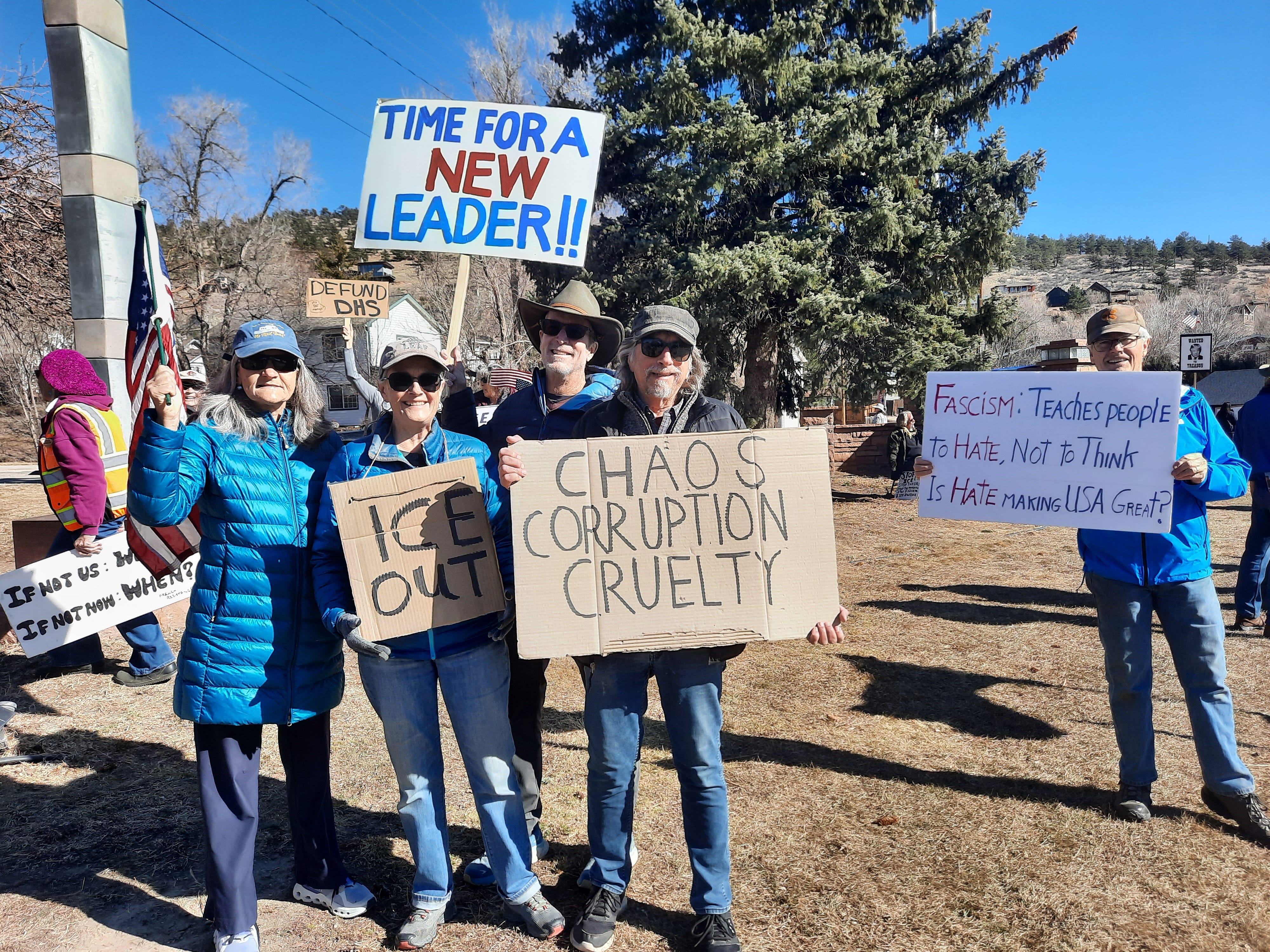
Lyons, CO
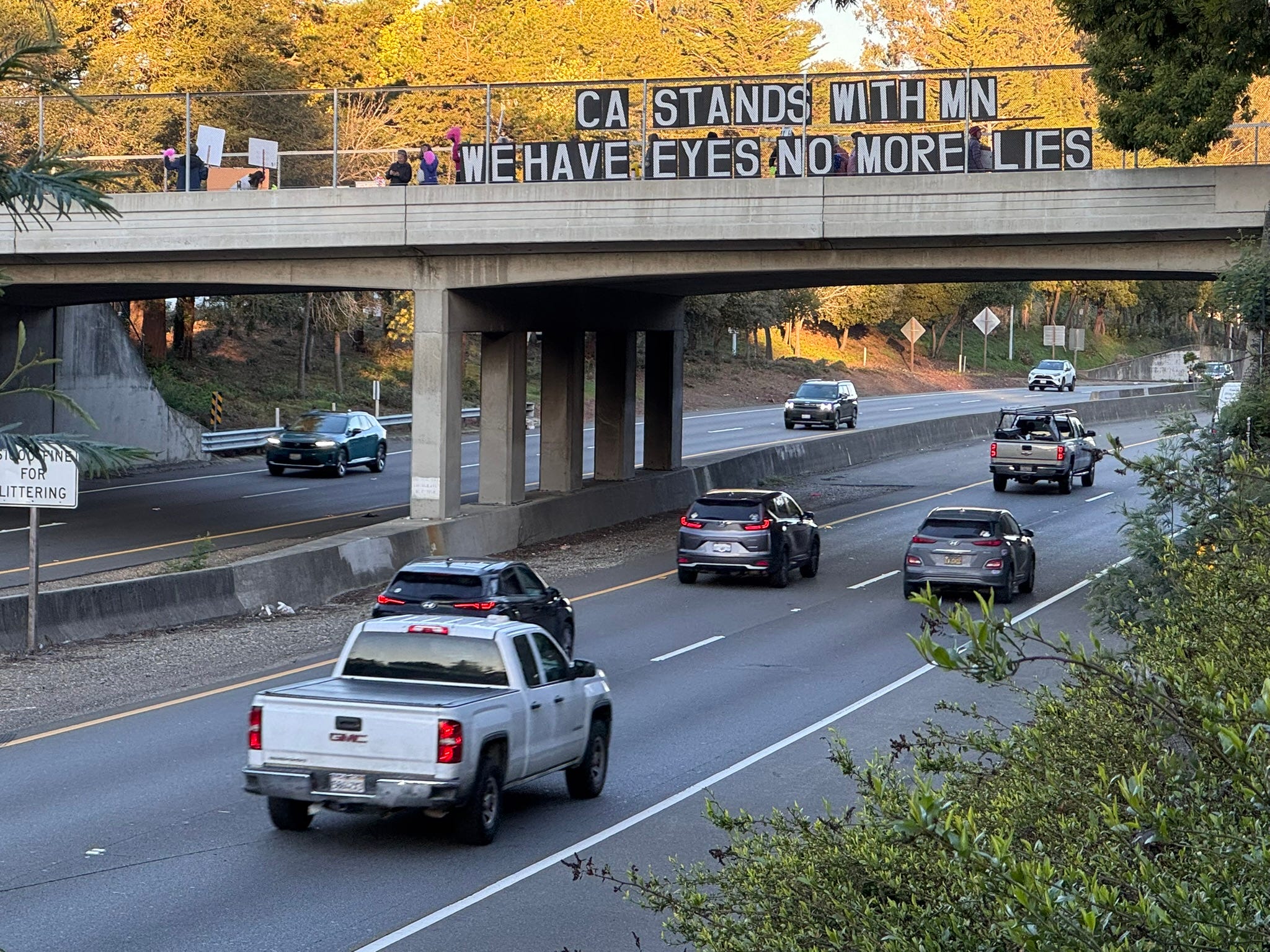
Oakland, CA
Port Townsend, WA


Daily Dose of Perspective
The Rho Ophiuchi cloud complex is one of our closest star-forming neighbors, about 460 light-years from Earth,

Doesn't the release of nude photos of minors make the DoJ guilty of child pornography?
Anna Paulina Luna-tic’s SAVE Act stunt will not save her seat,considered the most flippable in Florida. Let’s support Earle Forde and take back the House !
“While Anna Paulina Luna protects the profits of the 1%, Earle Ford has spent his life hunting them down.
Earle isn’t a typical politician. He is a former IRS lawyer and auditor who specialized in the “High Wealth Industry.” His job was simple but difficult. He went after the top 1% of the top 1% to make sure they paid what they owed. He knows every loophole, every shelter, and every trick they use to hoard wealth while working families struggle to buy groceries.
They call him the “Billionaire Buster” for a reason. He understands that the system is rigged because he has seen the blueprints. He isn’t going to Washington to make friends with lobbyists. He is going there to audit them.”
https://open.substack.com/pub/livefromtheresistance/p/every-accusation-is-a-confession?utm_campaign=post-expanded-share&utm_medium=web